Researchers from Northwest University have made a significant breakthrough, uncovering rare bryozoan fossils in the Xiannvdong Formation in Hanzhong, Shaanxi. Published in Nature on June 3, the study led by Professor Zhang Zhifei provides concrete evidence of bryozoans originating in the early Cambrian period.
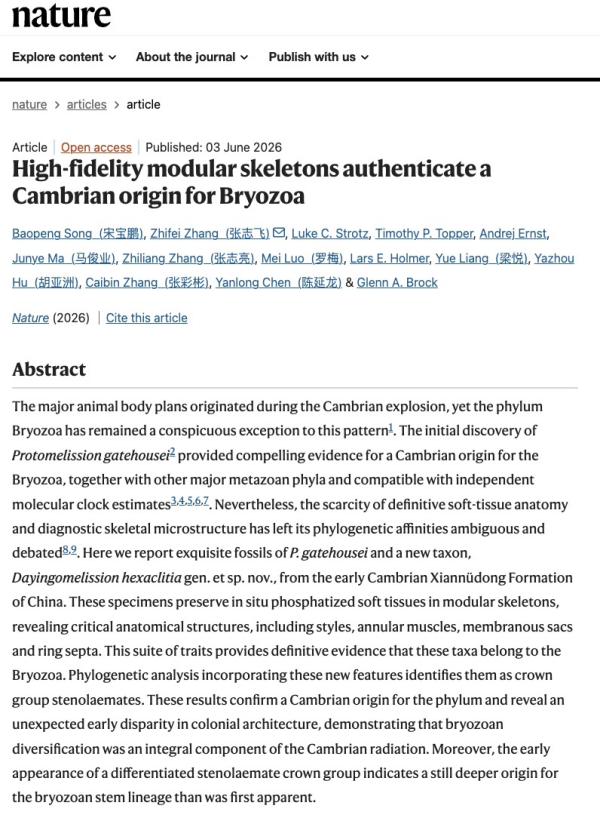
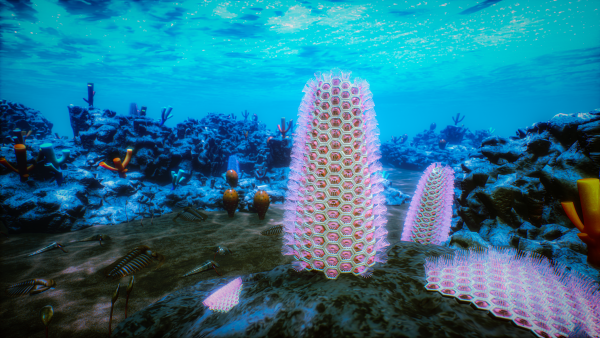
The Cambrian Explosion is a crucial event in evolutionary history, marking the rapid emergence of most major animal phyla. Bryozoans, important marine organisms, were suspected to have Cambrian ancestors, but evidence was elusive due to their small size and identification challenges.
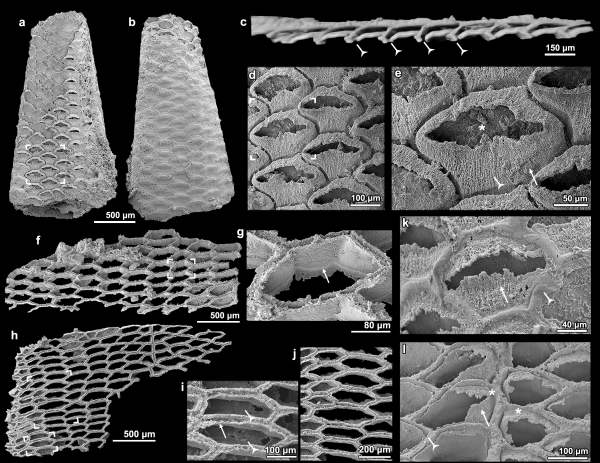
The fossils discovered by Zhang's team preserve both mineralized skeletons and soft tissues, such as membranes and muscle fibers, offering unprecedented insights. Using advanced techniques like scanning electron microscopy and X-ray tomography, the researchers identified two distinct bryozoan groups. These findings confirm that Cambrian bryozoans belong to the class Stenolaemata, with diverse community structures already present.
This discovery pushes the fossil record of mineralized bryozoans back by at least 50 million years, from the Ordovician to the early Cambrian. The study not only resolves longstanding mysteries about Cambrian bryozoans but also supports the "three-phase Cambrian Explosion" hypothesis.
The research highlights the explosive nature of the Cambrian period and provides a new timeline for the evolution of bryozoans. Future studies aim to explore the evolutionary mechanisms and environmental factors driving early bryozoan radiation.
The paper's first author is doctoral student Song Baopeng, with Professor Zhang as the corresponding author. Northwest University collaborated with international institutions, including the Chinese Academy of Sciences and universities in Sweden, Germany, Australia, and the Netherlands.
原文链接:
http://education.chinadaily.com.cn/2026-06/05/c_1188402.htm




 Copyright 2025 Northwest University. All Rights Reserved.437ccm必赢国际(中国)有限公司-BinG百科版权所有 陕ICP备05010980号-4 陕公网安备 61011602000427号
 校长信箱
校长信箱 信息门户
信息门户 OA
OA 图书馆
图书馆
 EN
EN